Pearson Edexcel · GCSE · English Literature
19th-Century Novel and Poetry since 1789
Component 2 challenges you to explore the rich, complex worlds of the 19th-century novel and poetry spanning over two centuries. Mastering this component requires sharp analytical skills, a deep understanding of context, and the ability to compare texts — skills that will earn you top marks.
- 3 min read
- 2 worked examples
- 4 practice questions
- 8 key terms
Study Notes
Overview
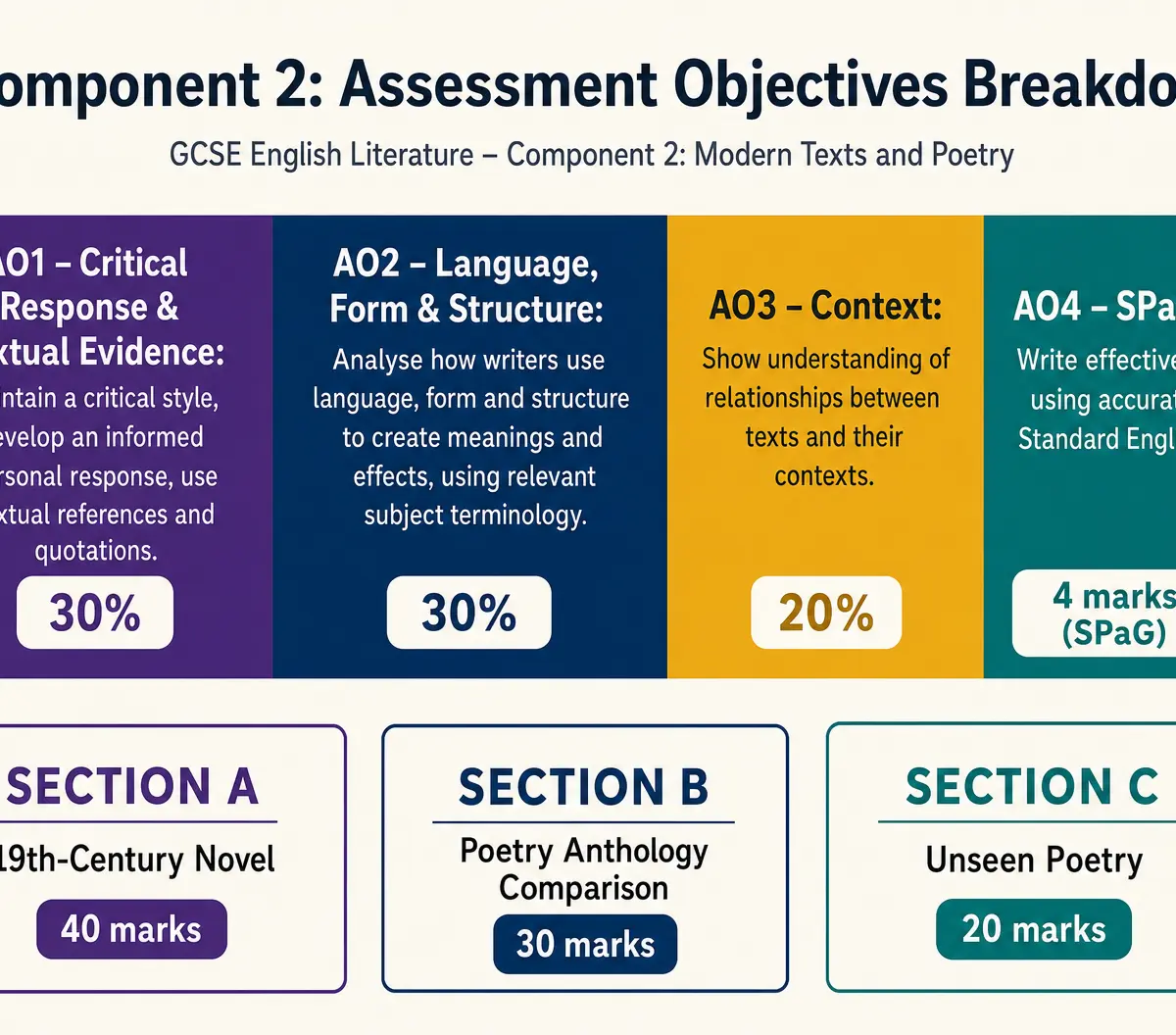
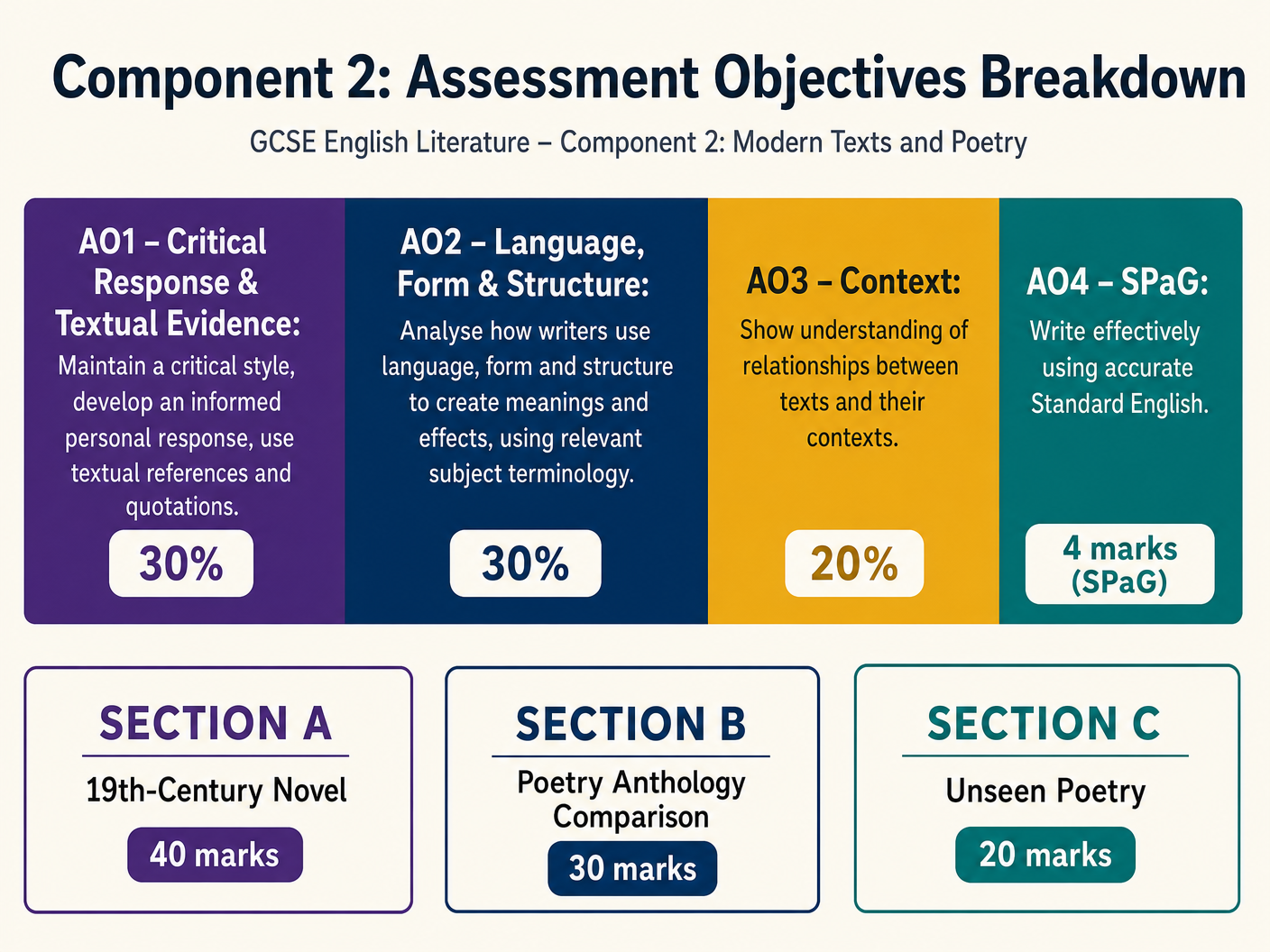
Component 2 of the GCSE English Literature specification requires candidates to study one 19th-century novel and a poetry anthology collection (along with unseen poetry). Examiners are looking for a "conceptualised response" — this means moving beyond simple plot summary to develop a critical, overarching argument about the writer's intentions. You must seamlessly integrate context (AO3) into your analysis of language, form, and structure (AO2), while maintaining a clear, informed personal response supported by precise textual references (AO1). Remember, 4 marks are also awarded for spelling, punctuation, and grammar (AO4).
19th-Century Novel: Key Approaches
The 19th century was a period of immense social, political, and technological upheaval. Whether you are studying Dickens, Brontë, or Shelley, examiners expect you to understand how these writers used fiction as a vehicle for social commentary.
Theme 1: Social Class and Inequality
19th-century writers frequently critiqued the stark divide between the wealthy elite and the impoverished working classes. In your exam, you must explain how the writer presents this inequality.
Key Quotes (General Examples):
- "Are there no prisons?" (A Christmas Carol) - Scrooge's rhetorical question highlights the callousness of the Victorian upper classes towards the poor.
- "I am no bird; and no net ensnares me" (Jane Eyre) - Jane's assertion of independence challenges both class and gender constraints.
Theme 2: Morality and Redemption
Many 19th-century novels focus on a character's moral journey. Examiners reward candidates who can trace this character arc and link it to wider societal values.
Poetry Anthology Comparison
Section B requires you to compare one named poem with another poem of your choice from the anthology. The key to success here is genuine comparison throughout your essay, not just writing two separate mini-essays.
Unseen Poetry
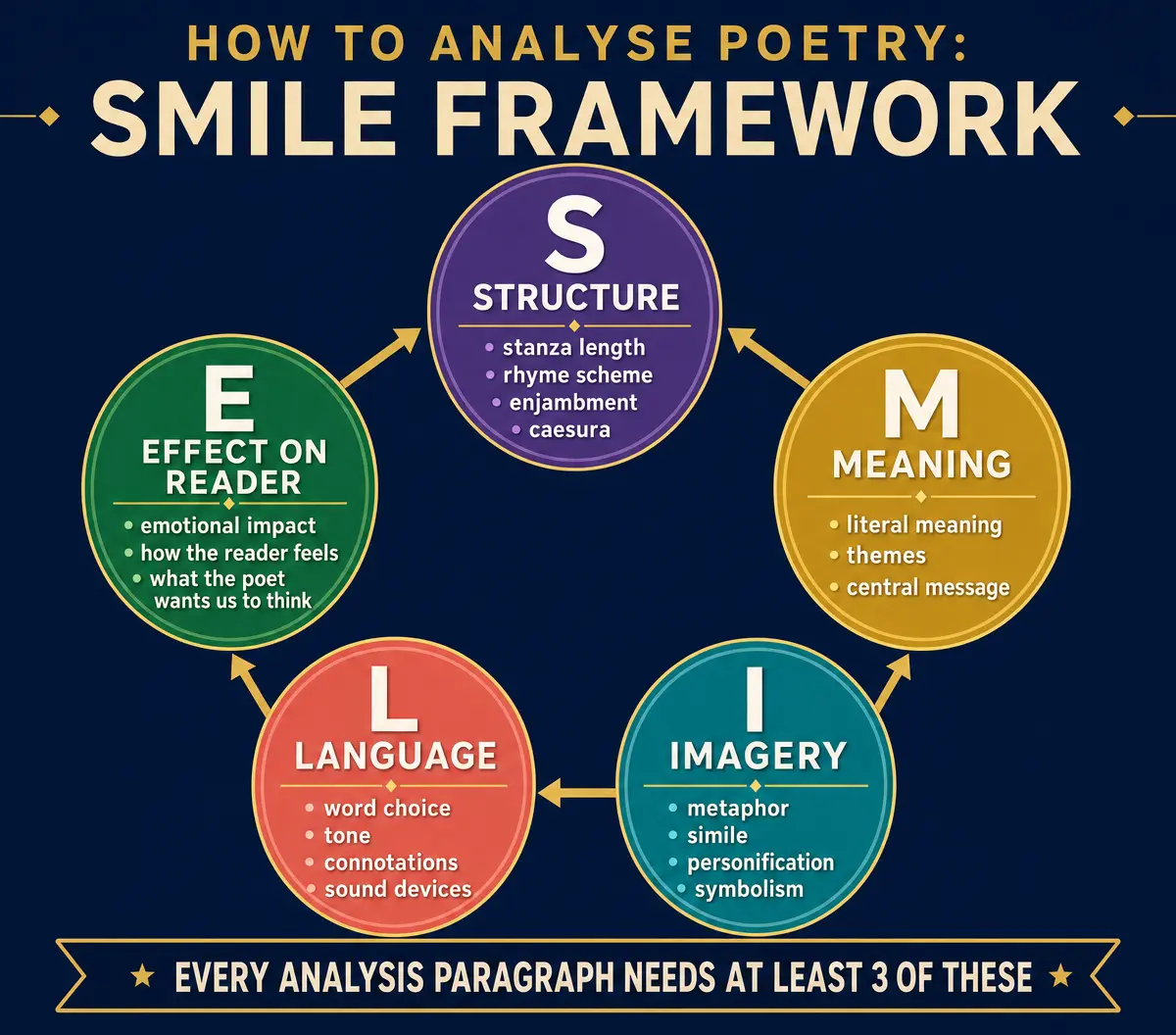
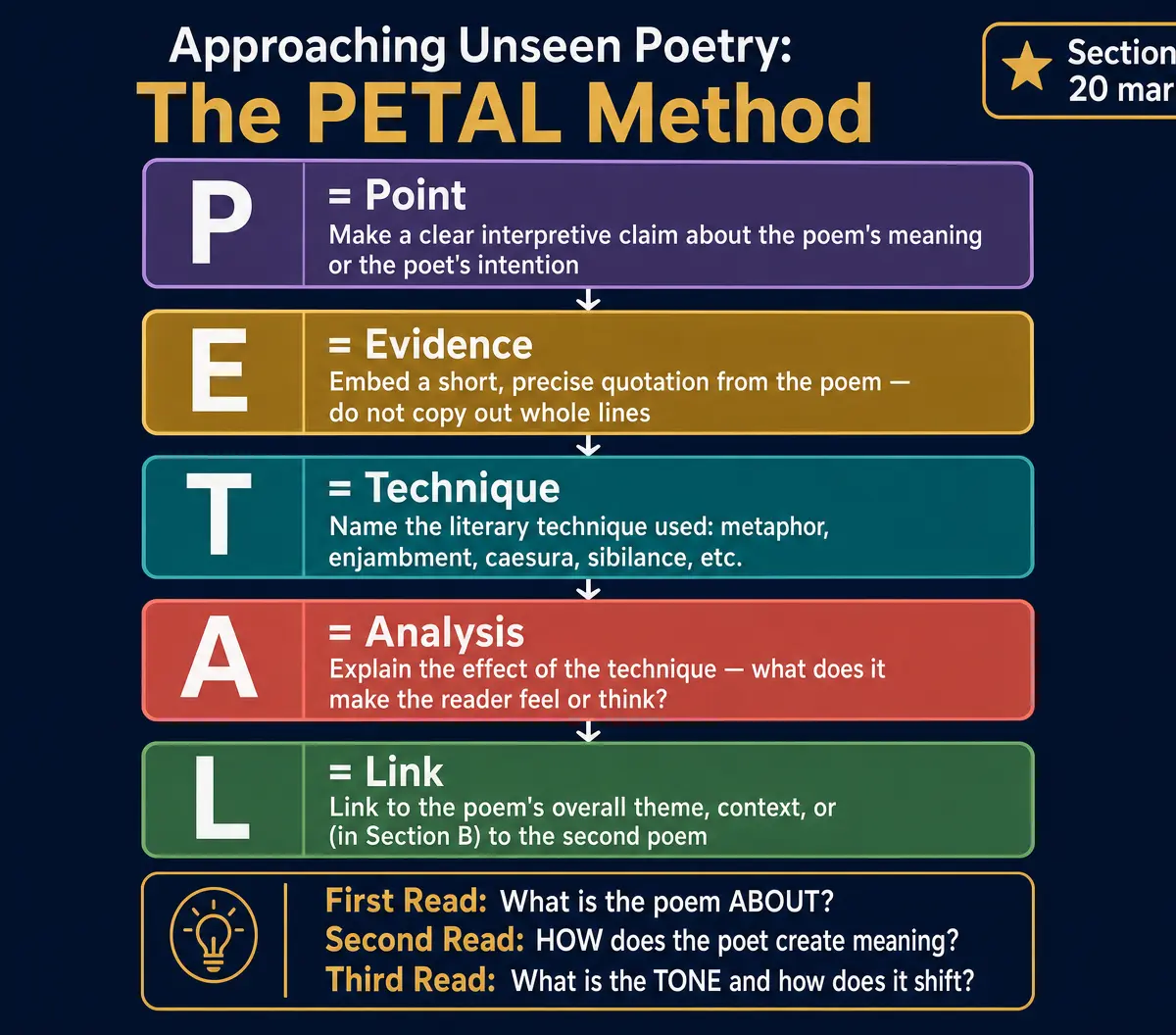
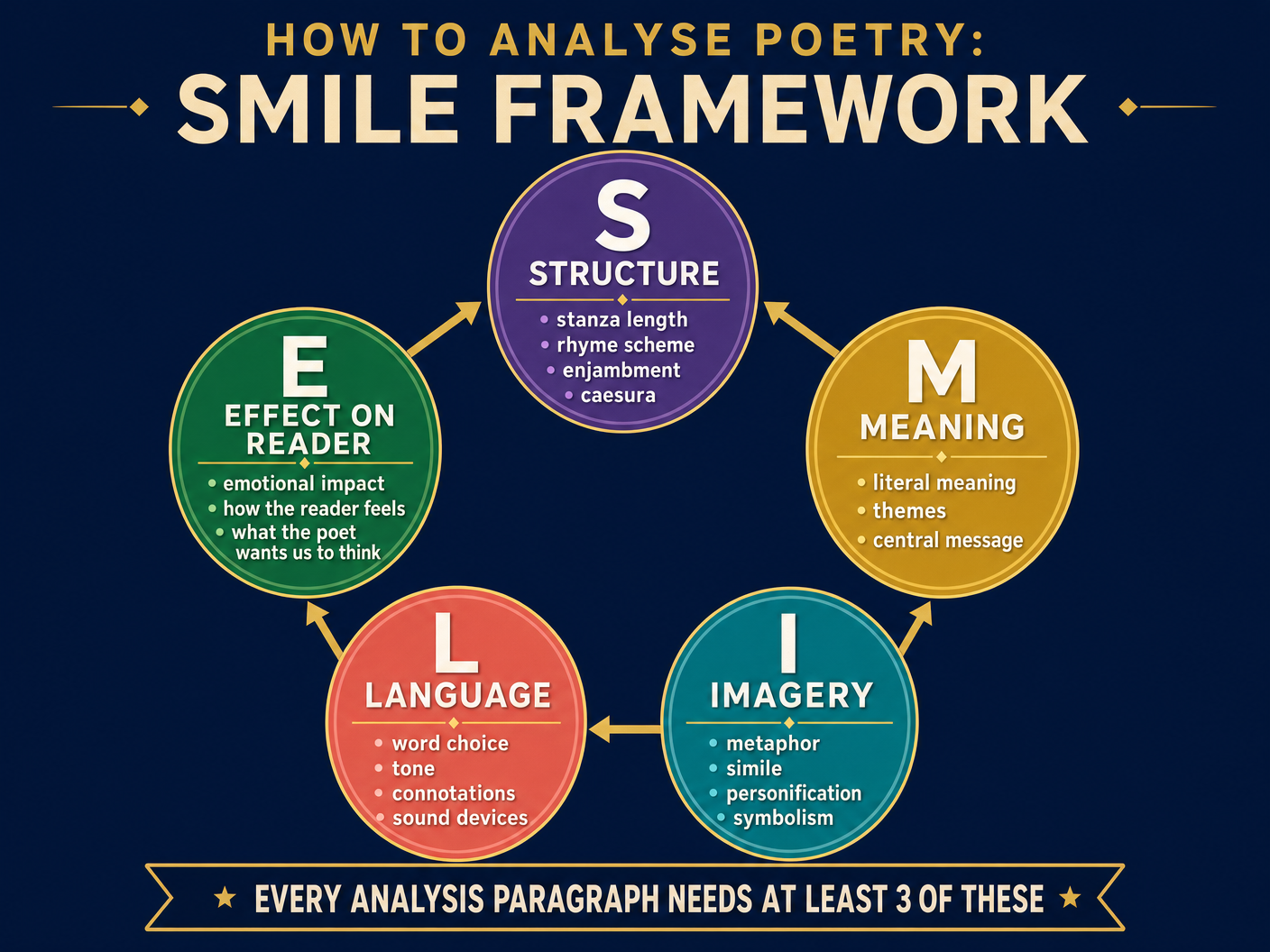
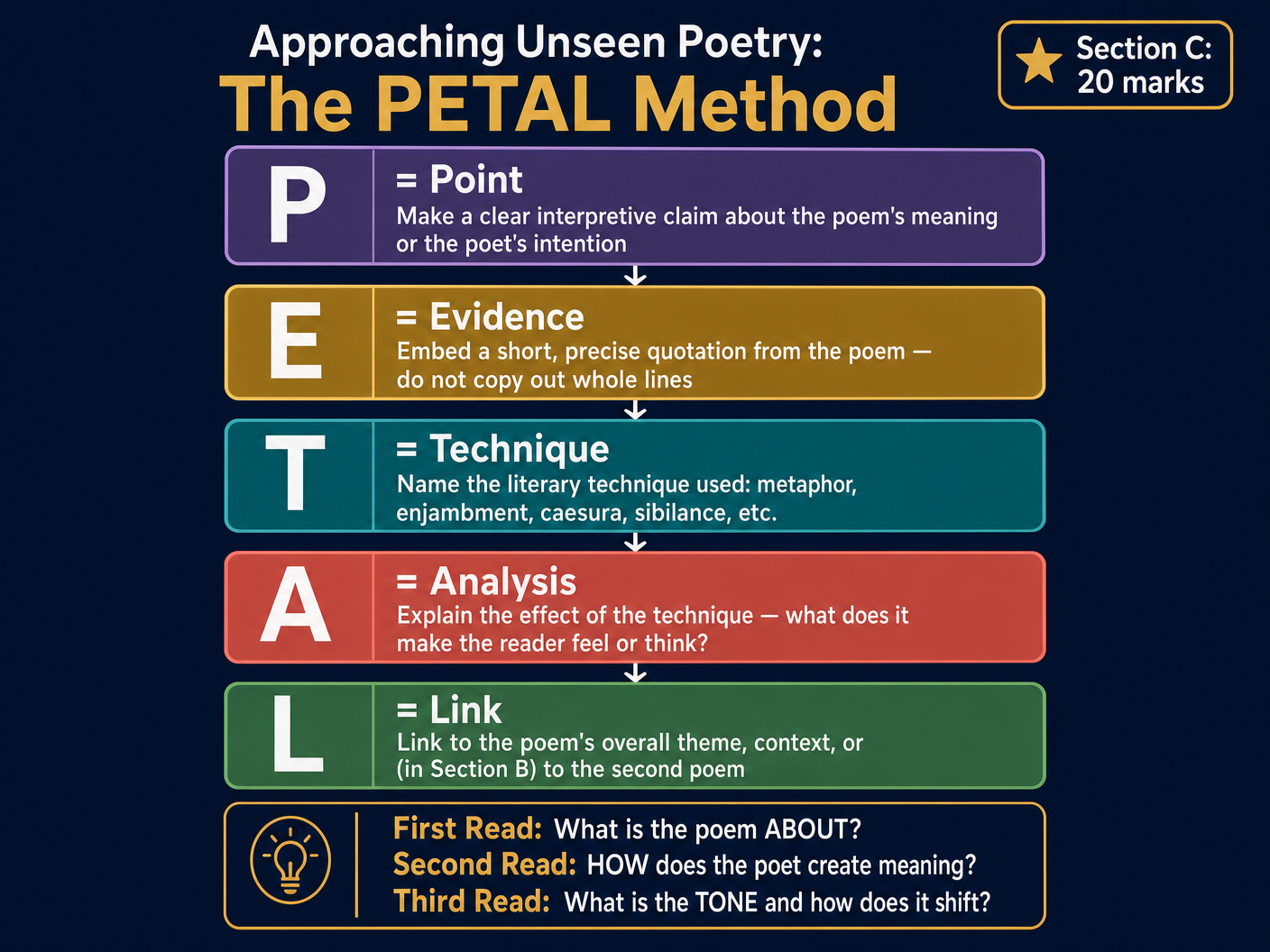
Section C presents you with an unseen poem (and a shorter comparison question). Do not panic! You have the analytical tools to succeed. Read the poem three times: first for meaning, second for methods, and third for tone.
Listen to the Revision Podcast

Listen to our comprehensive 17-minute audio guide covering all the core concepts, exam tips, and a quick-fire recall quiz.
Visual Resources
3 diagrams and illustrations
Interactive Diagrams
1 interactive diagram to visualise key concepts
Conceptual Flow Outline
Recommended Essay Structure and Planning Flow
Worked Examples
2 worked examples — open one to explore the question and available guidance.
Practice Questions
Test your understanding — click to reveal model answers
Starting with this extract, explore how the writer presents the importance of redemption and change. (30 marks + 4 AO4)
Hint: Consider the character's state at the beginning of the novel versus the end. How does the writer use structure to show this journey?
Compare how poets present the reality of conflict in [Poem A] and one other poem from the anthology. (30 marks)
Hint: Don't just look at physical conflict. Consider psychological conflict, the aftermath of war, or the conflict between humans and nature.
In the unseen poem, how does the poet present the speaker's feelings about childhood? (24 marks)
Hint: Look for shifts in tone. Does the speaker view childhood with nostalgia, regret, or a mix of both? Use PETAL paragraphs.
Starting with this extract, explore how the writer presents the role of women in society. (30 marks + 4 AO4)
Hint: Think about how the female characters conform to or rebel against 19th-century expectations of the 'Angel in the House'.